

total potential investment committed to 60 large-scale investment projects in Saskatchewan by private companies one of the largest capital budgets in Saskatchewan history investment in workforce development the rate at which the small business tax will remain - saving Saskatchewan small businesses more than $50 million annually second-lowest net debt-to-GDP ratio among the provinces international offices to continue to diversify markets and strengthen the economy
$60 billion+

$4.3 billion

$125 million

1%

#2

9
Protecting Saskatchewan’s future with a strong and growing economy
A strong and growing economy allows the Government of Saskatchewan to protect the services and opportunities residents rely on while preparing the province for the future. The 2026-27 Budget protects Saskatchewan’s future by investing in people, supporting key industries and strengthening economic competitiveness. Strategic investments will grow our labour force, expand international trade, support resource development and maintain Saskatchewan’s position as one of the best places in the world to live, work and invest.
2026-27 Budget highlights: • $125 million investment for the Ministry of Immigration and Career Training to support workforce development programs and services for unemployed and underemployed individuals. These include: • $22 million for adult essential skills training to provide foundational skills such as literacy, numeracy and job readiness. • $22 million for post-secondary skills training programs that prepare people for in-demand occupations in sectors including health care, construction, mining and manufacturing. • $26 million for pre-employment programs and services, including work placements and career counselling delivered through third-party partners. • $10 million to support persons with disabilities as they prepare to transition into the workforce. • Increasing apprenticeship training capacity with an additional 300 training seats, bringing the total to 5,300 seats and increasing the province’s annual apprenticeship investment to $27 million. • Increasing the Apprenticeship Training Allowance to $3 million to support apprentices attending training away from their home communities. • Increasing funding for the Regina and Saskatoon Trades and Skills Centres, allowing additional training opportunities for workers entering skilled trades. • Increasing funding through the Labour Market Transfer Agreement with the federal government to support worker retraining and protect Saskatchewan jobs during economic disruptions. 2026-27 Budget highlights: • Maintaining the small business tax rate at one per cent, benefiting more than 35,000 small businesses and saving them over $50 million annually in corporate income taxes. • Continuing the Small and Medium Enterprise Investment Tax Credit, a three-year pilot program offering a 45 per cent non-refundable tax credit to encourage investment in Saskatchewan-based manufacturing businesses. • Supporting the Young Entrepreneur Bursary, which provides $5,000 bursaries to young entrepreneurs across the province and will deliver nearly $1 million in funding over three years. • Supporting direct flights to Minneapolis and Denver through minimum revenue guarantees with the Regina and Saskatoon airport authorities, helping maintain key business and trade connections. • Strengthening Saskatchewan’s international engagement and market diversification efforts through the province’s global network of trade and investment offices. • Advancing internal trade efforts, including work to reduce barriers through the Saskatchewan Internal Trade Promotion Act. • Saskatchewan ranked first among the provinces for private capital investment growth in 2025, totaling $13.6 billion, an increase of 12 per cent from the previous year. • Saskatchewan’s real GDP is expected to reach a record $90.5 billion in 2025, increasing 2.2 per cent and ranking 3rd among provinces in economic growth. 2026-27 Budget highlights: • $2 million invested in the Saskatchewan Geological Survey’s Public Geoscience Initiative to improve access to geoscience data and encourage new mineral exploration. • $4 million provided for the Targeted Mineral Exploration Incentive, supporting mineral exploration and continued growth in Saskatchewan’s mining sector. • Extending the High Water-Cut Oil Well Program to encourage investment in existing wells and support the province’s goal of reaching 600,000 barrels of oil production per day by 2030. • Modernizing Saskatchewan’s Crown timber dues to better reflect production costs and support the growth of the forestry sector. • Saskatchewan continues to rank among the world’s top jurisdictions for mining investment, reflecting strong investor confidence and competitive exploration incentives. 2026-27 Budget highlights: • Investing $663 million in agriculture, an increase of 6.0 per cent, demonstrating the government’s continued commitment to the sector. • A $524 million investment builds sector resilience through a strong suite of business risk management programs including Crop Insurance and AgriStability. This increased funding ensures Saskatchewan producers can access reliable coverage and responsive service delivery that meets the needs of their operations. • $89 million continued funding through the Sustainable Canadian Agricultural Partnership for programs focused on innovation, competitiveness and sustainability that strengthen Saskatchewan’s agri-food sector. • $37 million invested in agricultural research, supporting world-class research institutions and demonstration farms in the province. • Fully funding animal welfare enforcement for livestock and companion animals through the Saskatchewan Animal Enforcement Agency. • $200,000 for expanded mental health supports for agriculture producers, workers and their families through the Saskatchewan Farm Stress Line that will connect with the National Farmer Crisis Line and offer access to follow up counselling. 2026-27 Budget highlights: • $5 million annual program support for Advancing Saskatchewan’s Research Strategy through the continued rollout of the Innovation and Science Fund. • Expanding the Saskatchewan Technology Startup Incentive to include life sciences companies, creating new opportunities for innovation-driven businesses. • $3 million investment in the Vaccine and Infectious Disease Organization (VIDO) as it becomes Canada’s Centre for Pandemic Research. • Providing operational support for Saskatchewan’s leading research institutes, including the Canadian Light Source, Saskatchewan Health Research Foundation, International Minerals Innovation Institute, PTRC Sustainable Energy, the Sylvia Fedoruk Canadian Centre for Nuclear Innovation and the University of Saskatchewan’s Crop Development Centre and Livestock and Forage Centre of Excellence. • Supporting Saskatchewan’s research and technology parks in Regina and Saskatoon to strengthen the province’s innovation ecosystem and drive commercialization of new technologies.

The 2026-27 Budget invests in programs and services that prepare Saskatchewan people for the opportunities created by a strong and growing economy while protecting workers and businesses during times of global uncertainty.
Related resources:

The 2026-27 Budget continues to strengthen Saskatchewan’s economic competitiveness by supporting businesses, expanding trade opportunities and attracting investment from around the world.
Related resources:
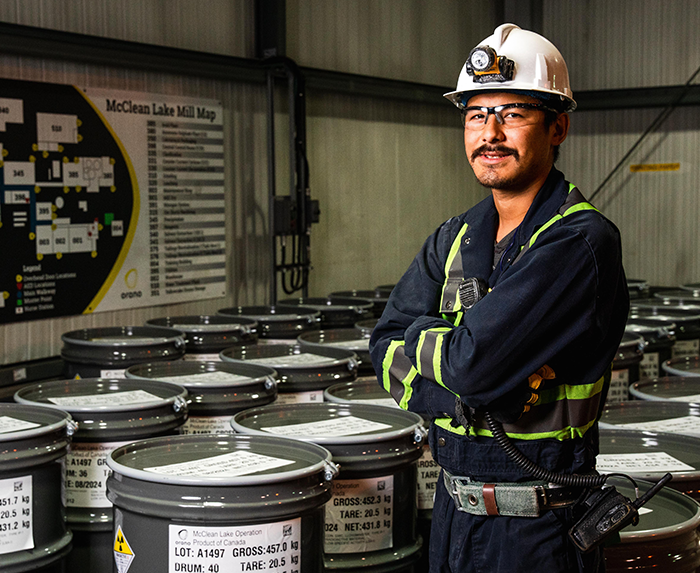
Saskatchewan’s natural resource sectors remain a cornerstone of the provincial economy. The 2026-27 Budget includes strategic investments that support growth in energy, mining and forestry while encouraging exploration and long-term sustainability.
Related resources:

Agriculture continues to be a cornerstone of Saskatchewan’s economy and a key driver of exports and rural growth. The 2026-27 Budget provides strong support to ensure producers remain competitive, resilient and prepared for the future.
Related resources:
Innovation and research are essential to Saskatchewan’s long-term economic success. The 2026-27 Budget supports innovation programs, research institutes and technology development that create new opportunities for businesses and communities.
Related resources: